
Ashwagandha (Indian ginseng)
Withania somnifera (L.) Dunal · Solanaceae (nightshade family) · Part used: Root; some products use the leaf
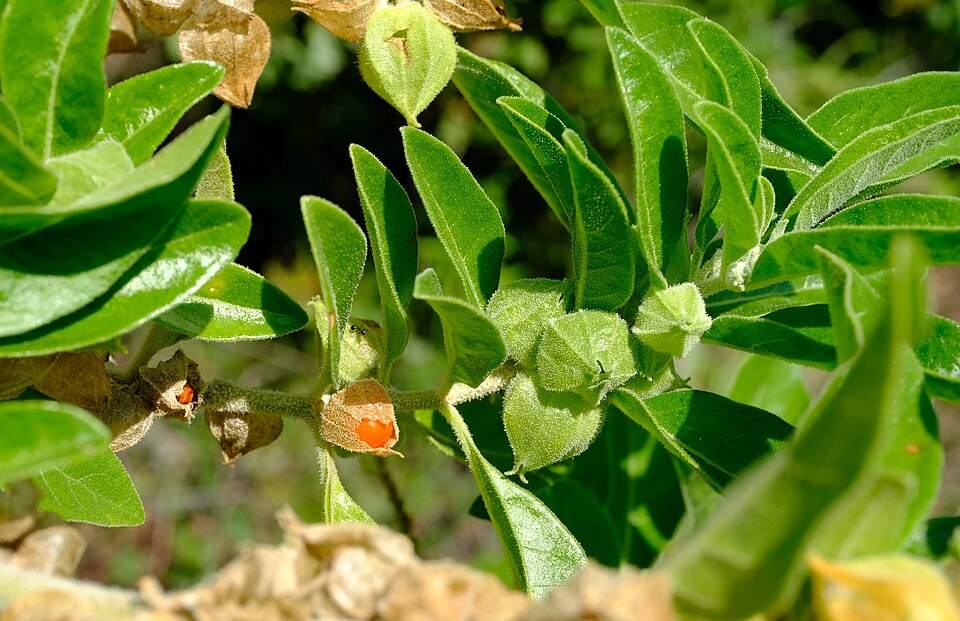

Ashwagandha contains withanolides, steroidal lactones built on an ergostane skeleton. Clinical trials have mostly looked at stress, anxiety and sleep, and they are small and short.
Main chemical constituents
- Withanolides: withaferin A, withanolide A, withanolide D and the withanosides
- Alkaloids (withanine, somniferine), saponins and sitoindosides
- The composition varies with the part of the plant used (root or leaf) and with where it was grown
Active compounds (layer 3)
Evidence by use
| Use | Evidence level | Notes |
|---|---|---|
| Lower stress and less anxiety | Moderate evidence | Several small randomised trials lasting 6–12 weeks; the extracts and doses differ, and many were paid for by the manufacturer. |
| Better sleep quality | Preliminary evidence | There are some encouraging signs, but the samples are small. |
| Lower cortisol | Preliminary evidence | Trials do not agree with one another. |
Safety and precautions
- There are reports of a series of liver injuries linked to ashwagandha. Stop taking it if you develop jaundice, dark urine or persistent tiredness.
- It may raise thyroid hormone levels, so people with thyroid disease should be careful.
- Do not take it in pregnancy, and take care if you use sedatives or immunosuppressants.
Related articles
- Ashwagandha: an adaptogen, or just hype?
- Herbs in pregnancy: a cautious approach
- The placebo effect in herbal research
References
- Chandrasekhar K, Kapoor J, Anishetty S. A prospective, randomized double-blind, placebo-controlled study of safety and efficacy of a high-concentration full-spectrum extract of ashwagandha root in reducing stress and anxiety in adults. Indian J Psychol Med. 2012;34(3):255–262.
- Björnsson HK, et al. Ashwagandha-induced liver injury: A case series from Iceland and the US Drug-Induced Liver Injury Network. Liver Int. 2020;40(4):825–829.