
Black elderberry
Sambucus nigra L. · Adoxaceae (moschatel family) · Part used: Ripe berries and flowers
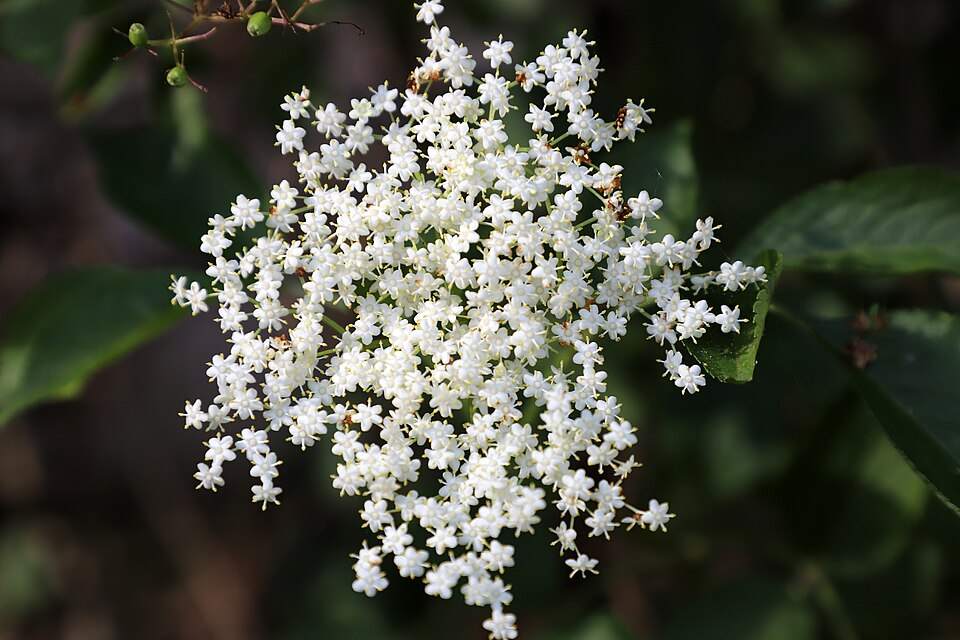

Black elderberries are rich in anthocyanins. Raw or unripe parts contain cyanogenic glycosides, so the fruit must be cooked before it is eaten.
Main chemical constituents
- Anthocyanins: cyanidin-3-sambubioside and cyanidin-3-glucoside
- Flavonols: rutin and quercetin
- Phenolic acids; raw berries contain sambunigrin, a cyanogenic glycoside
Active compounds (layer 3)
Evidence by use
| Use | Evidence level | Notes |
|---|---|---|
| Shorter and milder flu and cold symptoms | Preliminary evidence | A meta-analysis of four small trials (Hawkins 2019) found fewer upper respiratory symptoms, but the samples were small. |
Safety and precautions
- Never eat the raw or uncooked berries, leaves, bark or seeds; they can cause nausea and vomiting.
- The amount of active compound varies between commercial products, so choose a standardised one.
Related articles
- Herbal tea for the airways: a recipe and the data behind it
- Black elderberry: why it must be cooked first
- Anthocyanins: strongly active in the test tube, poorly absorbed in people
References
- Hawkins J, Baker C, Cherry L, Dunne E. Black elderberry (Sambucus nigra) supplementation effectively treats upper respiratory symptoms: A meta-analysis of randomized, controlled clinical trials. Complement Ther Med. 2019;42:361–365.