
Garlic
Allium sativum L. · Amaryllidaceae (amaryllis family) · Part used: Bulb (garlic cloves)
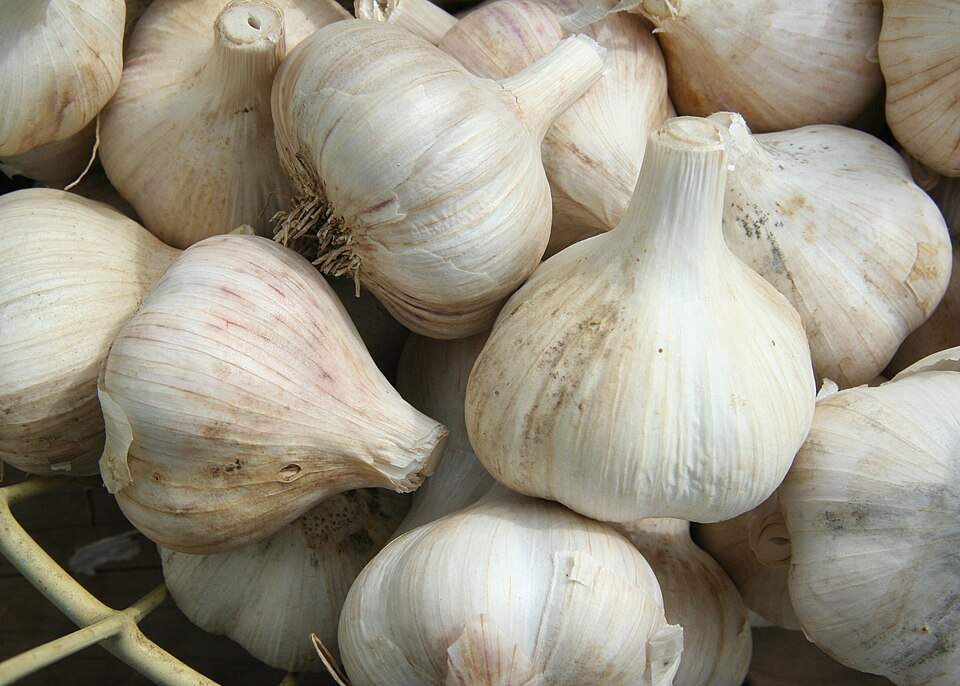

An intact garlic clove contains alliin, which has no smell. When the clove is crushed or cut, the enzyme alliinase turns alliin into allicin, the unstable compound responsible for garlic's characteristic smell.
Main chemical constituents
- Alliin (S-allyl-L-cysteine sulfoxide), the odourless precursor
- Allicin and other thiosulfinates, formed when garlic is crushed
- Ajoene and diallyl sulfide; S-allylcysteine in aged garlic
- Saponins and fructans
Active compounds (layer 3)
Evidence by use
| Use | Evidence level | Notes |
|---|---|---|
| Lower blood pressure in people with hypertension | Moderate evidence | Meta-analyses show a fall in systolic pressure of a few mmHg, usually with aged garlic extract; the trials are small. |
| Lower total cholesterol | Preliminary evidence | The effect is small and differs from one preparation to another. |
| Preventing the common cold | Preliminary evidence | There are very few data. |
Safety and precautions
- It causes bad breath, heartburn and stomach upset, and high doses can irritate the lining of the gut.
- It has a mild antiplatelet effect, so take care if you use anticoagulants or are about to have surgery.
- It may lower blood levels of some antiviral drugs (saquinavir).
Related articles
References
- Ried K. Garlic lowers blood pressure in hypertensive individuals, regulates serum cholesterol, and stimulates immunity: an updated meta-analysis and review. J Nutr. 2016;146(2):389S–396S.