
Gac (Momordica cochinchinensis)
Momordica cochinchinensis (Lour.) Spreng. · Cucurbitaceae (gourd family) · Part used: Seed aril
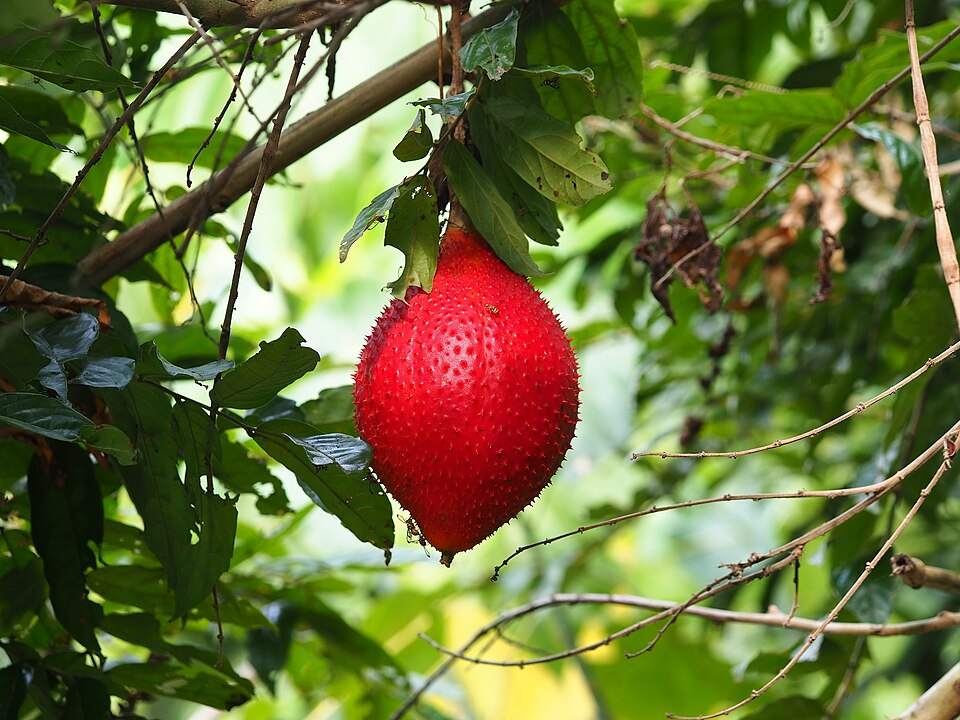

The red aril around the gac seeds is rich in lycopene and β-carotene, and is reported to be among the richest natural sources of lycopene. It is best known in xôi gấc, gac sticky rice.
Main chemical constituents
- Carotenoids: lycopene, β-carotene and zeaxanthin
- Fatty acids in the aril oil
- Ribosome-inactivating proteins (in the seeds)
Active compounds (layer 3)
Evidence by use
| Use | Evidence level | Notes |
|---|---|---|
| A supply of provitamin A | Moderate evidence | There are data on how well children absorb the β-carotene in gac sticky rice. |
| A cardiovascular benefit from lycopene | Preliminary evidence | Observational data; there are few intervention trials. |
Safety and precautions
- Carotenoids dissolve in fat, so some fat in the meal is needed for them to be absorbed.
- Eating very large amounts can turn the skin orange-yellow for a while (carotenaemia).
- Gac seeds are not for eating.