
Herb–drug interactions: what to know before you combine them

Herbs are mixtures of many active compounds and can change the levels or effects of prescription drugs. The plant that most often causes interactions is St John's wort.
In brief
Interactions happen in two ways: pharmacokinetic (the herb changes the drug level) and pharmacodynamic (the herb adds to the drug's effect or opposes it). The risk is highest with drugs that have a narrow therapeutic range, such as warfarin, ciclosporin and other immunosuppressants.
Typical examples
- St John's wort (Hypericum perforatum): induces CYP3A4 and P-glycoprotein and so lowers the levels of many drugs, including ciclosporin and some antivirals.
- Herbs that affect clotting (such as turmeric and ginger at high doses): take care if you use anticoagulants.
- Sedative herbs: may add to the effect of sedatives.
What to do
- Take a list of everything you use when you see a doctor.
- Tell your doctor before any surgery.
- Never stop a prescription drug on your own in order to take herbs.
Go deeper (mechanisms, methods, limitations)
Why herbs are hard to predict
The content of active compounds varies with the source, the season and the method of extraction. Interaction studies often rest on case reports and in vitro experiments, and there are rarely human pharmacokinetic trials for each product.
References
- Izzo AA, Ernst E. Interactions between herbal medicines and prescribed drugs: an updated systematic review. Drugs. 2009;69(13):1777–1798.
More articles

Piperine in black pepper and the bioavailability of curcumin
Piperine greatly raises blood curcumin levels, but the same mechanism also changes how many drugs are metabolised.
Turmeric and curcumin: what the evidence says about inflammation
Curcumin does many things in laboratory experiments, but the clinical evidence is modest. This article separates what we know at the level of cells, animals and people.
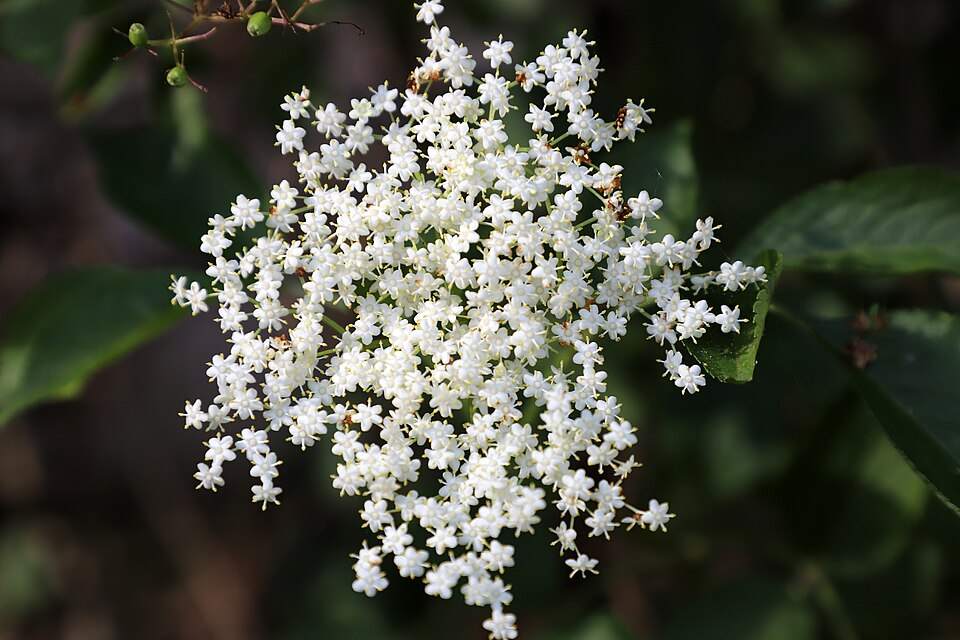
Black elderberry: why it must be cooked first
The raw berries, leaves, stems and seeds of black elderberry contain cyanogenic glycosides. Cooking reduces the risk of poisoning.