
Ginger and digestion: how it works

Gingerol and shogaol act on the 5-HT3 and TRPV1 receptors. The best clinical evidence is for nausea in pregnancy.
In brief
In many trials ginger eased nausea slightly, especially in pregnancy. The effect on nausea caused by chemotherapy is not consistent.
How it was used in the studies
A common dose is about 1 g of ginger (powder or extract) a day, divided into several portions. Fresh and dried ginger differ in their ratio of gingerol to shogaol.
Go deeper (mechanisms, methods, limitations)
Mechanism
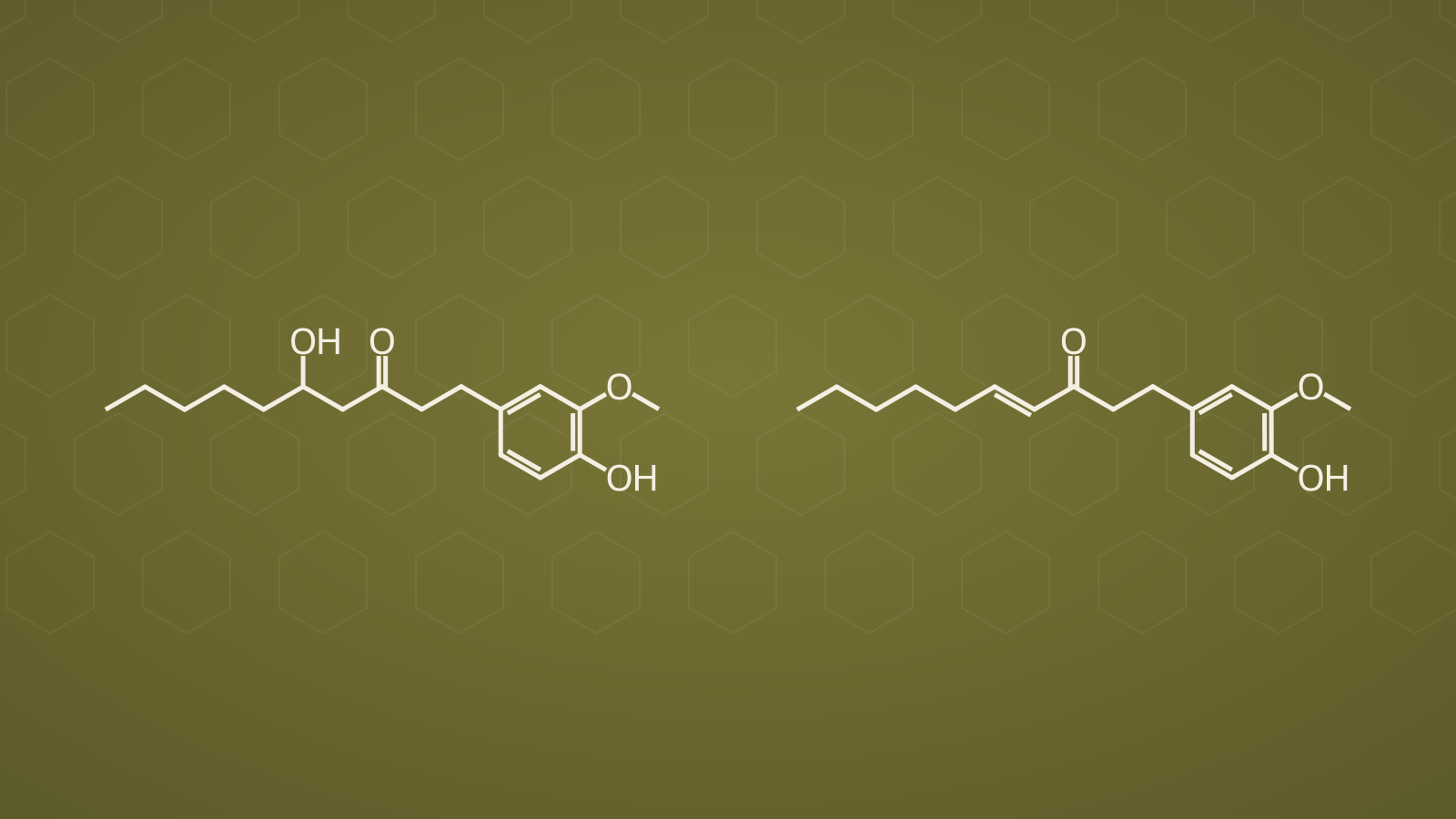
In in vitro experiments, 6-gingerol and 6-shogaol non-competitively inhibit the 5-HT3 receptor of nerve cells in the gut, the same target as the setron class of anti-nausea drugs. These compounds also activate TRPV1 and may increase movement of the stomach.
Processing changes the active compounds
Drying or heating converts gingerol to shogaol by dehydration. Every report should therefore state the material used and how it was processed.
In the library
References
- Viljoen E, et al. Nutr J. 2014;13:20.
More articles
Herbs in pregnancy: a cautious approach
There are very few safety data on most herbs in pregnancy. The general rule is to avoid them until there is evidence that they are safe.

Cranberry and urinary tract infection: the evidence today
A 2023 Cochrane review found that cranberry may lower the risk of urinary tract infection in some groups, but it does not treat an infection that is already under way.

Caffeine: how much is reasonable?
EFSA considers that healthy adults can have up to 400 mg of caffeine a day with no safety concern, and 200 mg in pregnancy.