
Green tea
Camellia sinensis (L.) Kuntze · Theaceae (tea family) · Part used: Leaves and young buds
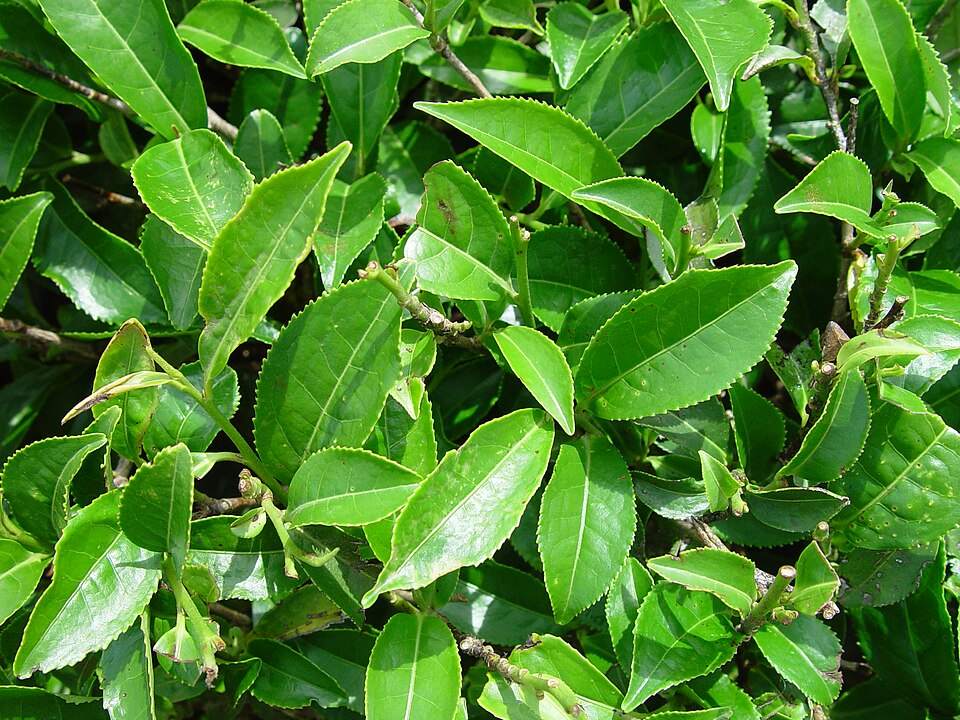

Green tea leaves are rich in catechins, mainly EGCG, and contain caffeine. Drinking the tea is safe, but high-dose EGCG extract capsules have been linked to liver injury.
Main chemical constituents
- Catechins: (−)-epigallocatechin-3-gallate (EGCG), EGC, ECG and EC
- Purine alkaloids: caffeine and theobromine
- L-theanine, an amino acid characteristic of tea
- Flavonol glycosides and saponins
Active compounds (layer 3)
Evidence by use
| Use | Evidence level | Notes |
|---|---|---|
| Help with weight loss | Preliminary evidence | A Cochrane review found no weight loss that mattered clinically. |
| A slight fall in blood pressure and LDL cholesterol | Preliminary evidence | The effects are small, and many of the trials are short. |
| Greater alertness (caffeine and theanine) | Moderate evidence | The effect of caffeine is well established; the part played by theanine is unclear. |
Safety and precautions
- Drinking tea in ordinary amounts is generally safe.
- EFSA (2018) noted that EGCG doses of 800 mg a day or more from supplements can raise liver enzymes; avoid taking them on an empty stomach.
- Caffeine can cause insomnia and palpitations, and tea reduces the absorption of non-haem iron.
Related articles
- Caffeine: how much is reasonable?
- Drinking green tea versus taking EGCG extract capsules: two different things
References
- Jurgens TM, et al. Green tea for weight loss and weight maintenance in overweight or obese adults. Cochrane Database Syst Rev. 2012;(12):CD008650.
- EFSA Panel on Food Additives and Nutrient Sources. Scientific opinion on the safety of green tea catechins. EFSA J. 2018;16(4):5239.