
St John's wort
Hypericum perforatum L. · Hypericaceae (St John's wort family) · Part used: Aerial parts and flowering tops
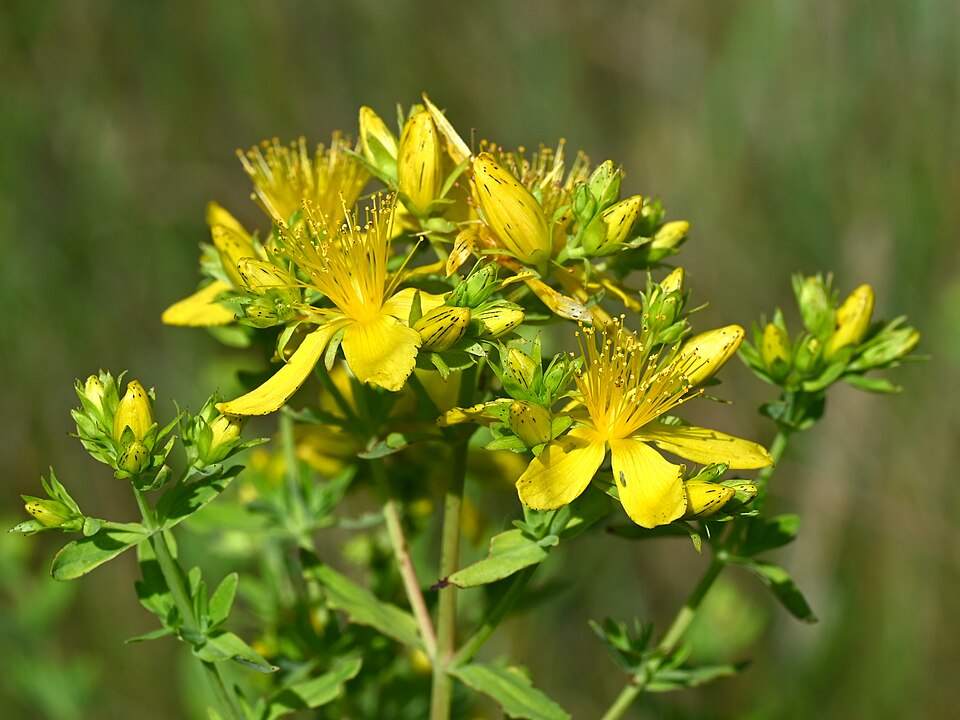

St John's wort has the best clinical data of any herb in mild to moderate depression, but it is also the plant that interacts most strongly with drugs, because it switches on drug-metabolising enzymes.
Main chemical constituents
- Phloroglucinols: hyperforin and adhyperforin
- Naphthodianthrones: hypericin and pseudohypericin
- Flavonoids (rutin, hyperoside, quercetin) and biflavonoids (biapigenin)
Active compounds (layer 3)
Evidence by use
| Use | Evidence level | Notes |
|---|---|---|
| Mild to moderate depression | Strong evidence | A Cochrane review found it more effective than placebo and about as effective as standard antidepressants, with fewer side effects in the trials. |
| Severe depression | Preliminary evidence | The evidence is not enough to support a recommendation. |
Safety and precautions
- It induces CYP3A4, CYP2C9 and P-glycoprotein, and so lowers blood levels of ciclosporin, HIV antivirals, oral contraceptives, warfarin and many other drugs.
- Do not combine it with SSRI antidepressants or MAO inhibitors, because of the risk of serotonin syndrome.
- It makes the skin sensitive to light, and it should not be used in pregnancy.
Related articles
References
- Linde K, Berner MM, Kriston L. St John's wort for major depression. Cochrane Database Syst Rev. 2008;(4):CD000448.