
Liquorice
Glycyrrhiza glabra L. · Fabaceae (legume family) · Part used: Root and rhizome
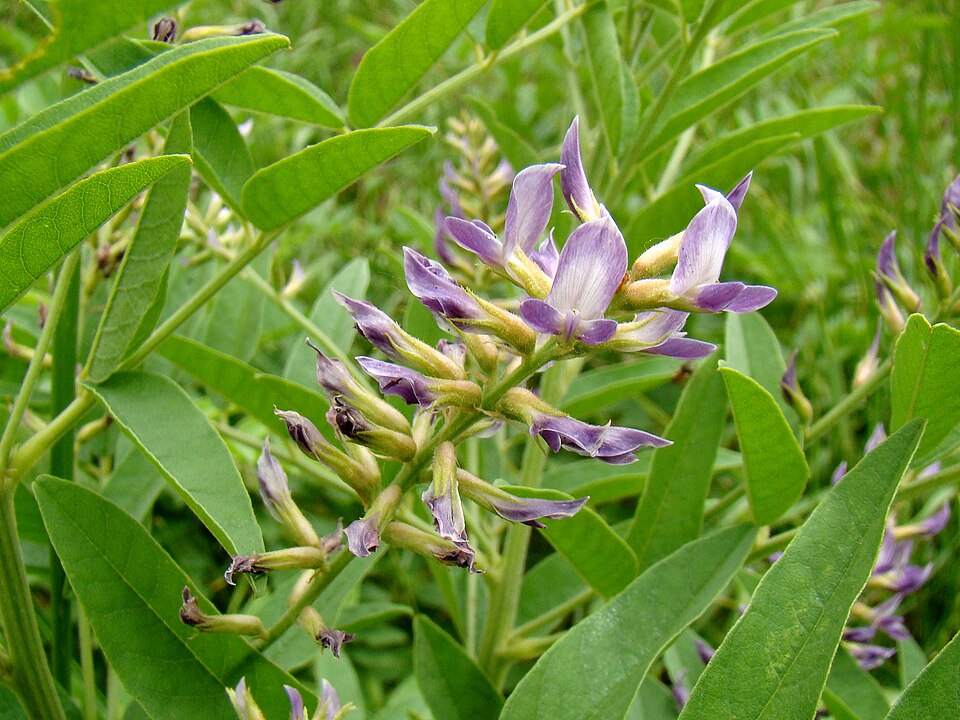

Liquorice gets its sweetness from glycyrrhizin, which is about 50 times sweeter than sugar. Eating a lot of it, or eating it for a long time, causes low blood potassium and high blood pressure.
Main chemical constituents
- Glycyrrhizin (a salt of glycyrrhizic acid), usually 2–8% of the dried root
- Flavonoids: liquiritin and isoliquiritigenin; chalcones
- Glabridin (in G. glabra) and polysaccharides
Active compounds (layer 3)
Evidence by use
| Use | Evidence level | Notes |
|---|---|---|
| Relief of heartburn and indigestion (deglycyrrhizinated liquorice, DGL) | Preliminary evidence | The trials are small. |
| Relief of cough and sore throat (traditional use) | Preliminary evidence | This rests mainly on experience and laboratory studies. |
Safety and precautions
- Glycyrrhizin inhibits 11β-HSD2, which lets cortisol activate the mineralocorticoid receptor. The result is sodium retention, low potassium, high blood pressure, swelling and muscle weakness.
- Many agencies treat about 100 mg of glycyrrhizin a day as a threshold for caution, and a lot of liquorice sweets can exceed it.
- Avoid liquorice if you have high blood pressure, heart failure or kidney disease, if you take diuretics or digoxin, and in pregnancy.
Related articles
References
- Omar HR, Komarova I, El-Ghonemi M, et al. Licorice abuse: time to send a warning message. Ther Adv Endocrinol Metab. 2012;3(4):125–138.