
Ginkgo
Ginkgo biloba L. · Ginkgoaceae (ginkgo family) · Part used: Leaf (standardised extract)
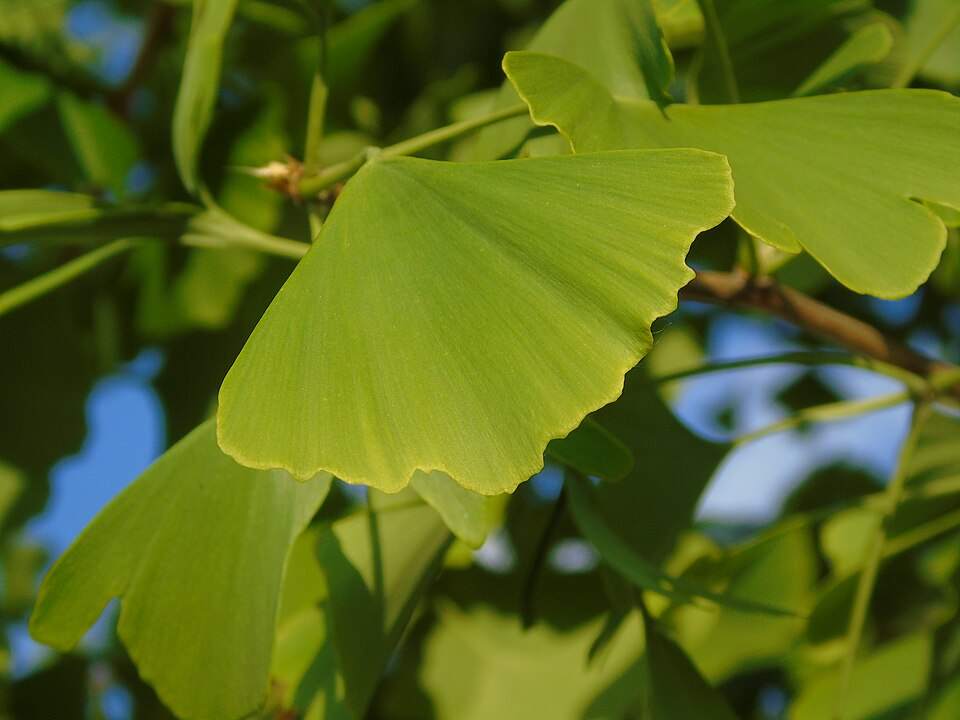

Standardised ginkgo leaf extract (such as EGb 761) contains flavonoid glycosides and terpene lactones. Large trials have found that it does not prevent dementia.
Main chemical constituents
- Flavonoid glycosides (quercetin, kaempferol, isorhamnetin), about 24% of EGb 761
- Terpene lactones: ginkgolides A, B, C and J and bilobalide, about 6% of EGb 761
- Ginkgolic acids, which are allergenic and strictly limited
Active compounds (layer 3)
Evidence by use
| Use | Evidence level | Notes |
|---|---|---|
| Preventing dementia | Strong evidence | The GEM trial, in more than 3,000 older adults, found no reduction in the number of people developing dementia. |
| Improving thinking in people with mild dementia | Preliminary evidence | Trials do not agree with one another. |
| Intermittent claudication | Preliminary evidence | Some analyses show a small effect. |
Safety and precautions
- There is a risk of bleeding, so take care if you use anticoagulants or antiplatelet drugs, or before surgery.
- Ginkgo seeds contain ginkgotoxin, which can cause seizures; never eat them raw.
- It can cause headache, digestive upset and allergic skin reactions.
Related articles
References
- DeKosky ST, et al. Ginkgo biloba for prevention of dementia: a randomized controlled trial. JAMA. 2008;300(19):2253–2262.