
Valerian
Valeriana officinalis L. · Caprifoliaceae (honeysuckle family) · Part used: Root and rhizome
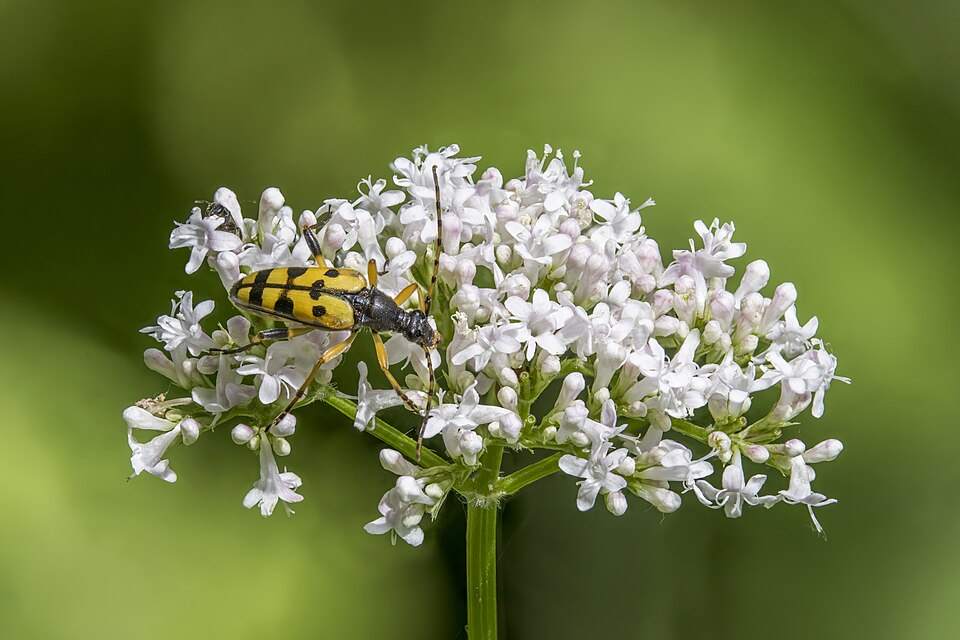

Valerian root is used for trouble sleeping. The active compounds are not clearly established, and trial results are inconsistent.
Main chemical constituents
- Valerenic acid and valerenal
- Valepotriates (iridoids)
- Isovaleric acid in the dried root, which gives it its characteristic smell
Active compounds (layer 3)
Evidence by use
| Use | Evidence level | Notes |
|---|---|---|
| Better sleep quality | Preliminary evidence | Meta-analyses report better sleep as people judge it themselves, but the trials differ widely. |
Safety and precautions
- It can cause headache, dizziness and drowsiness during the day.
- It adds to the effect of sedatives and alcohol.
- Rare cases of liver injury have been reported.
Related articles
References
- Bent S, Padula A, Moore D, Patterson M, Mehling W. Valerian for sleep: a systematic review and meta-analysis. Am J Med. 2006;119(12):1005–1012.