
Aloe vera
Aloe vera (L.) Burm.f. · Asphodelaceae (aloe family) · Part used: Leaf gel and leaf latex
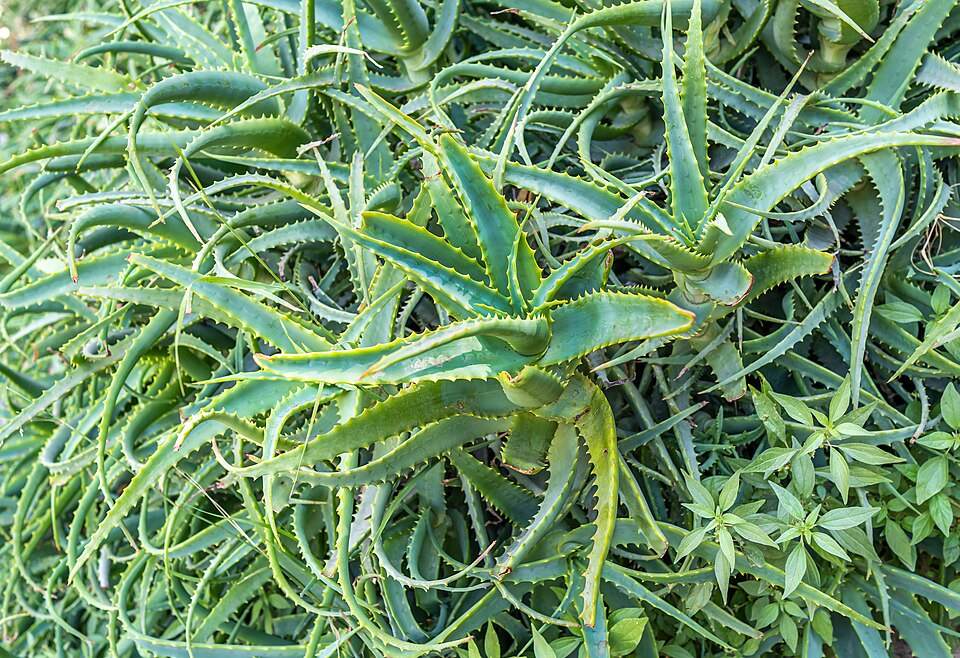

Aloe has two quite different parts: the clear gel in the middle of the leaf (polysaccharides) and the yellow latex just under the rind (laxative anthraquinones). It matters which one you use.
Main chemical constituents
- Gel: acemannan (a polysaccharide) and water
- Yellow latex: aloin (barbaloin) and aloe-emodin
- Salicylic acid and enzymes
Active compounds (layer 3)
Evidence by use
| Use | Evidence level | Notes |
|---|---|---|
| Support for healing of minor burns (gel applied to the skin) | Preliminary evidence | Some small trials report improvement, but the quality is low. |
| Laxative (yellow latex) | Moderate evidence | It works through its anthraquinones, but long-term use carries risks. |
Safety and precautions
- Whole-leaf extract that has not had its colour removed caused intestinal tumours in rats (NTP) and is classed by IARC in group 2B.
- Long-term use of the yellow latex causes potassium loss and dependence.
- The gel may cause contact dermatitis when applied to the skin.
Related articles
References
- National Toxicology Program. Toxicology and carcinogenesis studies of a non-decolorized whole leaf extract of Aloe barbadensis Miller (Aloe vera) in F344/N rats and B6C3F1 mice. NTP TR-577. 2013.