
Fish mint (diếp cá)
Houttuynia cordata Thunb. · Saururaceae (lizard's tail family) · Part used: Whole plant
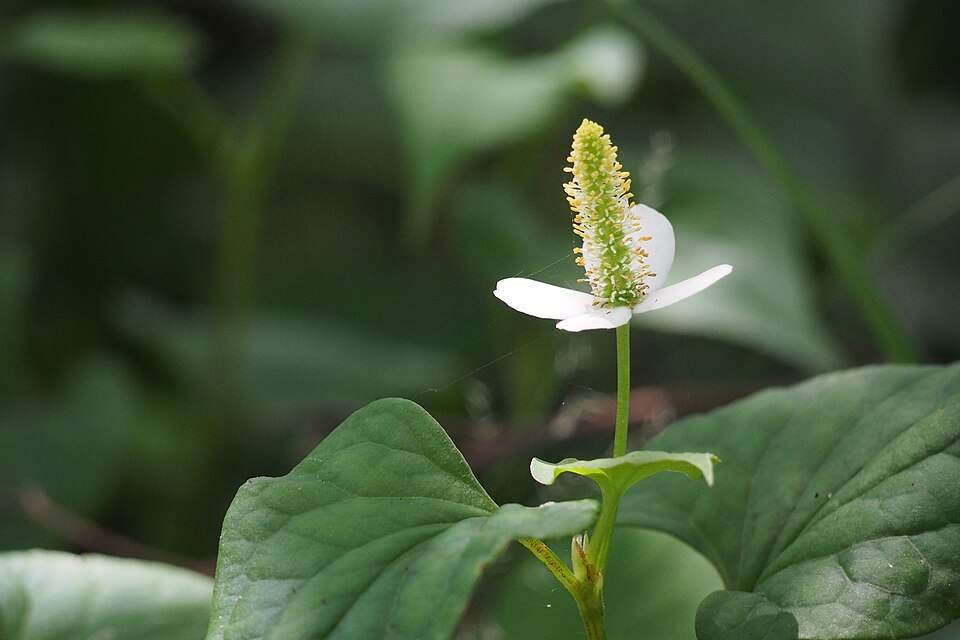

Fish mint (diếp cá, or giấp cá) is a common herb eaten with meals in Vietnam. Its fishy smell comes from decanoyl acetaldehyde (houttuynin) and related compounds.
Main chemical constituents
- Flavonoids: quercitrin, rutin and hyperoside
- Decanoyl acetaldehyde (houttuynin) and methyl n-nonyl ketone
- Alkaloids (aristolactams, at low levels)
Active compounds (layer 3)
QuercitrinC21H20O11 · Flavonol glycosideHouttuynin (decanoyl acetaldehyde)C12H22O2 · β-Keto aldehyde
Evidence by use
| Use | Evidence level | Notes |
|---|---|---|
| Antibacterial and anti-inflammatory activity | Preliminary evidence | Mostly in vitro and animal studies. |
| Support in the treatment of COVID-19 | Preliminary evidence | There is no convincing clinical evidence. |
Safety and precautions
- Eaten as a vegetable in ordinary amounts, it is generally safe.
- Injectable fish mint products in China have caused serious adverse reactions; never use it by injection.
- It may act as a diuretic, so take care if you use diuretics.