
Milk thistle
Silybum marianum (L.) Gaertn. · Asteraceae (daisy family) · Part used: Fruit (seed)
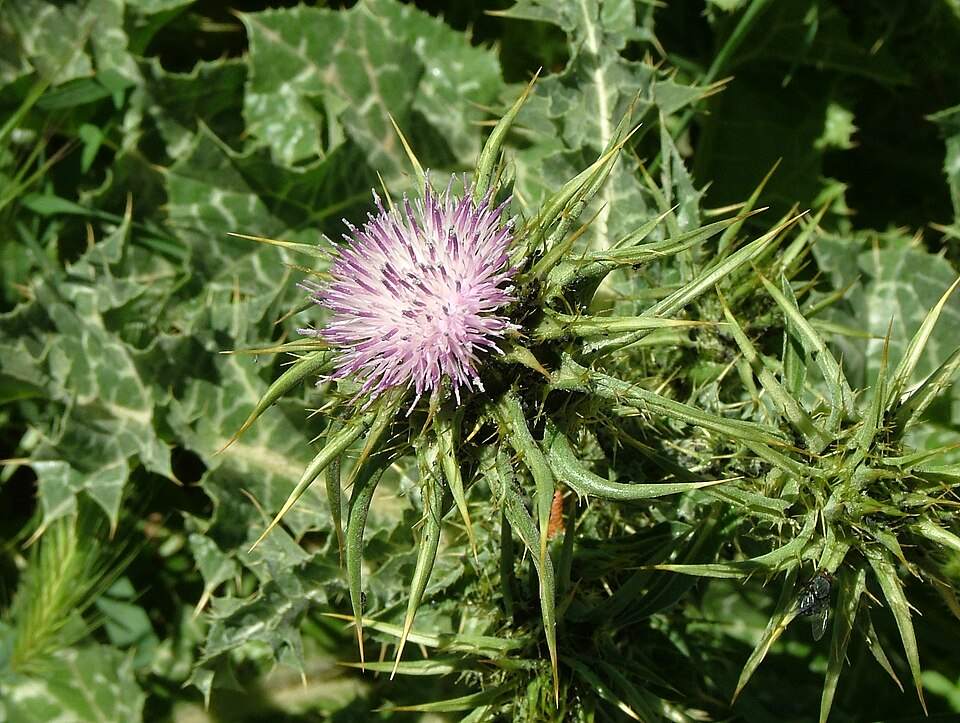

Milk thistle fruit contains silymarin, a mixture of flavonolignans in which silibinin is the main component. The clinical data on chronic liver disease are weak.
Main chemical constituents
- Silymarin: silibinin (silybin A and B), isosilibinin, silychristin and silydianin
- Taxifolin, a flavonoid
- A fatty oil rich in linoleic acid
Active compounds (layer 3)
Evidence by use
| Use | Evidence level | Notes |
|---|---|---|
| Alcoholic liver disease and hepatitis B and C | Preliminary evidence | A Cochrane review found no meaningful reduction in deaths or liver events. |
| Poisoning by the death cap mushroom (Amanita phalloides), using intravenous silibinin | Preliminary evidence | Some centres use it; the data come mainly from case reports and observational studies. |
Safety and precautions
- It is generally well tolerated, though it can cause mild digestive upset and a laxative effect.
- People who are allergic to the daisy family may react to it.
- It does not replace treatment for liver disease, and mushroom poisoning is a medical emergency.
Related articles
References
- Rambaldi A, Jacobs BP, Gluud C. Milk thistle for alcoholic and/or hepatitis B or C virus liver diseases. Cochrane Database Syst Rev. 2007;(4):CD003620.