
Grapefruit
Citrus × paradisi Macfad. · Rutaceae (citrus family) · Part used: Fruit
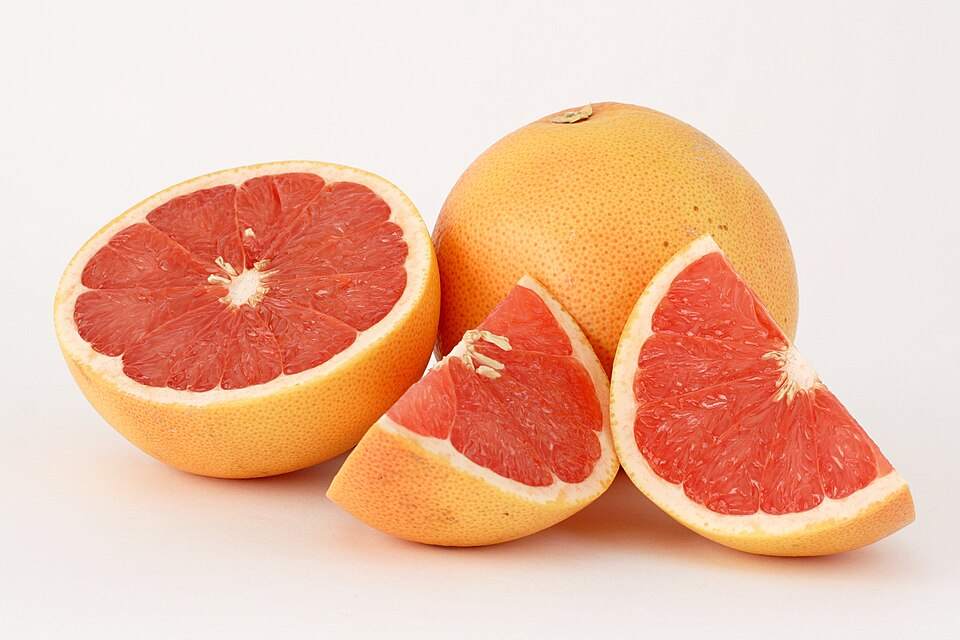

Grapefruit is the classic example of a food–drug interaction: its furanocoumarins block CYP3A4 in the gut and raise the blood levels of many drugs.
Main chemical constituents
- Furanocoumarins: bergamottin and 6',7'-dihydroxybergamottin
- Flavanones: naringin and naringenin
- Vitamin C
Active compounds (layer 3)
Evidence by use
| Use | Evidence level | Notes |
|---|---|---|
| Interaction with drugs (such as statins and calcium channel blockers) | Strong evidence | Documented in many pharmacokinetic trials and clinical guidelines. |
Safety and precautions
- Avoid it if you take a drug that carries a grapefruit interaction warning; the blocking effect can last for more than 24 hours.
- Vietnamese pomelo (Citrus maxima) may also contain furanocoumarins. There are fewer data, but the same caution applies.
- If you take prescription medicines, ask a pharmacist before eating it.
Related articles
References
- Bailey DG, Dresser G, Arnold JM. Grapefruit–medication interactions: forbidden fruit or avoidable consequences? CMAJ. 2013;185(4):309–316.