
Saffron
Crocus sativus L. · Iridaceae (iris family) · Part used: Stigma (the dried red threads)
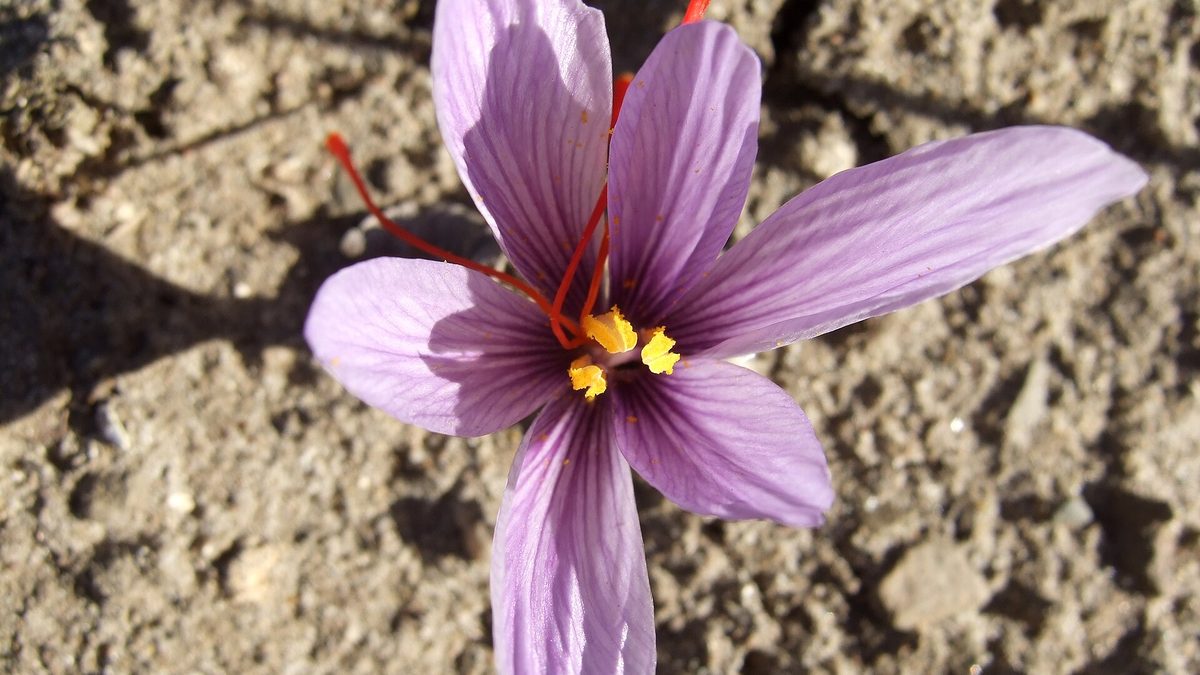

Saffron is the world's costliest spice. Its colour, bitterness and aroma come from crocins, picrocrocin and safranal, which are products of carotenoid breakdown. Trials, mostly small and many from Iran, report benefit in mild to moderate depression, but publication bias is likely.
Main chemical constituents
- Crocins: crocetin glycosyl esters, the red-yellow pigments
- Picrocrocin, the bitter glycoside, which yields safranal on drying and heating
- Safranal, the main aroma compound
- Other carotenoids and flavonoids in smaller amounts
Active compounds (layer 3)
Evidence by use
| Use | Evidence level | Notes |
|---|---|---|
| Mild to moderate depression | Moderate evidence | A 2013 meta-analysis of 5 trials found a large effect against placebo and similar effect to antidepressants; a 2019 meta-analysis of 23 studies found large effects too, but with evidence of publication bias and little regional diversity. Larger independent trials are still needed. |
| Anxiety symptoms | Preliminary evidence | The 2019 meta-analysis also reported a large effect on anxiety scores, with the same limitations of small trials and publication bias. |
What the evidence applies to
Standardised stigma extracts used in clinical trials, many of them from a small number of research groups in Iran. It does not cover the few threads used in cooking, or other parts of the flower.
What would change this grade
Up: independent trials outside the original groups, with pre-registered outcomes. Down: a meta-analysis that adjusts for publication bias and shows a small or no effect.
Last reviewed: 9 October 2026
Safety and precautions
- A systematic review of 102 trials estimated that about 17.5% of users had some adverse event, mostly minor and self-limiting stomach upset. Saffron is generally well tolerated, but higher doses or long use call for clinical monitoring.
- In pregnancy, low doses have been studied in late pregnancy, but higher doses are linked to uterine stimulation and miscarriage risk. Avoid supplement doses in pregnancy unless a doctor advises.
- Culinary amounts, a few threads in a dish, are not a concern.
References
- Hausenblas HA, Saha D, Dubyak PJ, et al. Saffron (Crocus sativus L.) and major depressive disorder: a meta-analysis of randomized clinical trials. Journal of integrative medicine. 2013;11(6):377-383. doi:10.3736/jintegrmed2013056. PMID: 24299602
- Marx W, Lane M, Rocks T, et al. Effect of saffron supplementation on symptoms of depression and anxiety: a systematic review and meta-analysis. Nutrition reviews. 2019;77(8):557-571. doi:10.1093/nutrit/nuz023. PMID: 31135916
- Hasheminasab FS, Hajimonfarednejad M, Najibi SM, et al. Adverse Events of Saffron (Crocus sativus L.): Systematic Review of Current Evidence. Health science reports. 2026;9(5):e72212. doi:10.1002/hsr2.72212. PMID: 42057871
- Alshdefat A, Ayed A, Aqtam I, et al. Saffron and Pregnancy: Cultural Practices, Beliefs, and Safety Evidence: An Integrative Review. Journal of evidence-based integrative medicine. 2026;31:2515690X261455162. doi:10.1177/2515690x261455162. PMID: 42186868
- Singh S, Sharma K. Review on the Phytochemistry and Pharmacological Potential of Saffron (Crocus sativus L.). Current topics in medicinal chemistry. 2025;25(16):1999-2018. doi:10.2174/0115680266352428250130112654. PMID: 39902539