
Bitter melon
Momordica charantia L. · Cucurbitaceae (gourd family) · Part used: Fruit (also leaf and seed in traditional use)
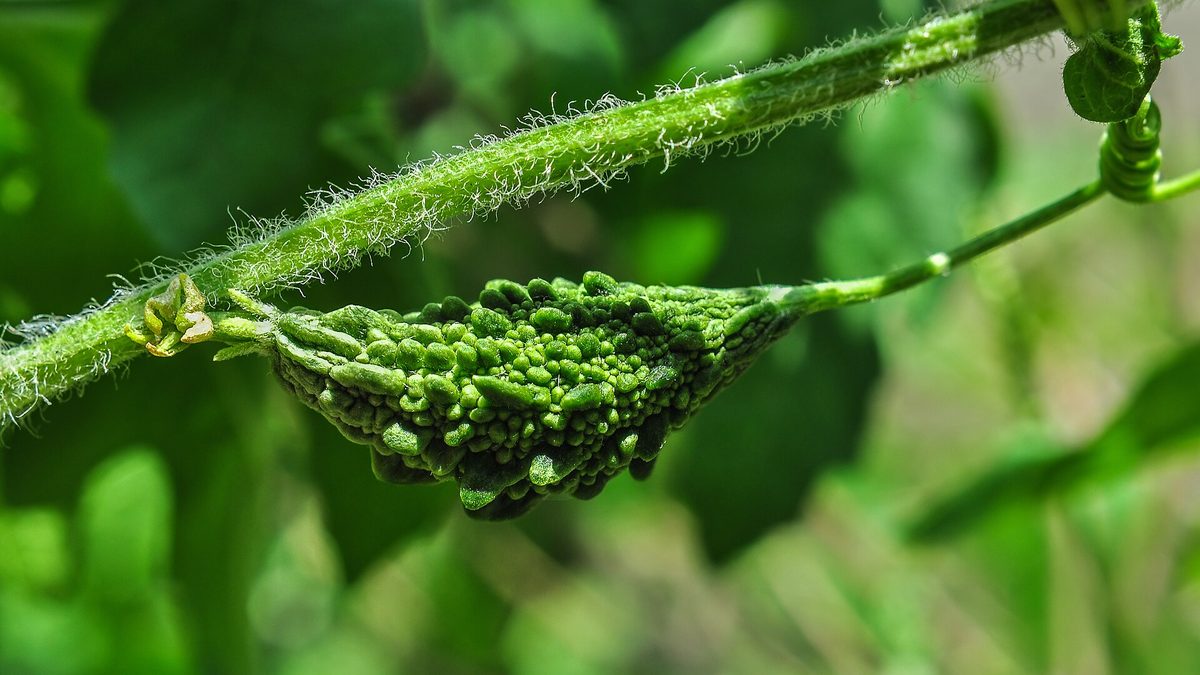

Mướp đắng is a common Vietnamese vegetable that is also taken as juice, powder and extract to lower blood sugar. A Cochrane review found insufficient evidence, while later pooled analyses suggest a modest effect with very uneven studies.
Main chemical constituents
- Cucurbitane triterpenoids: momordicins and momordicosides
- Charantin, a mixture of plant sterol glucosides
- Vicine, a pyrimidine glycoside concentrated in the seed
- Proteins, including ribosome-inactivating proteins such as MAP30 and a polypeptide sometimes called plant insulin
Active compounds (layer 3)
Evidence by use
| Use | Evidence level | Notes |
|---|---|---|
| Type 2 diabetes and prediabetes: blood glucose | Preliminary evidence | The 2012 Cochrane review found insufficient evidence and no significant difference from placebo or standard drugs in the two trials it could use. A 2025 meta-analysis of 25 trials reported lower fasting glucose and HbA1c, but with high variation between preparations. A 12-week trial in 76 Korean people with prediabetes found a lower post-meal glucose with an extract. |
What the evidence applies to
Trials used different preparations (juice, fruit powder, extract) and different parts of the plant, so no single preparation has been confirmed. Results apply to the product tested, not to bitter melon as a vegetable.
What would change this grade
Up: several trials of one standardised extract with HbA1c as the primary endpoint. Down: a pooled analysis limited to low-risk-of-bias trials showing no effect.
Last reviewed: 9 October 2026
Safety and precautions
- Bitter melon can lower blood sugar and may add to the effect of diabetes drugs; reports include hypoglycaemic coma and convulsions in children.
- Seeds contain vicine; a favism-like illness has been reported, so people with G6PD deficiency should avoid the seeds and concentrated products.
- Avoid concentrated products in pregnancy, as a precaution. As a vegetable, in normal cooking amounts, it is widely eaten.
References
- Ooi CP, Yassin Z, Hamid TA. Momordica charantia for type 2 diabetes mellitus. The Cochrane database of systematic reviews. 2012. doi:10.1002/14651858.cd007845.pub3. PMID: 22895968
- Basch E, Gabardi S, Ulbricht C. Bitter melon (Momordica charantia): a review of efficacy and safety. American journal of health-system pharmacy : AJHP : official journal of the American Society of Health-System Pharmacists. 2003;60(4):356-359. doi:10.1093/ajhp/60.4.356. PMID: 12625217
- Kim B, Lee HS, Kim HJ, et al. Momordica charantia (bitter melon) efficacy and safety on glucose metabolism in Korean prediabetes participants: a 12-week, randomized clinical study. Food science and biotechnology. 2023;32(5):697-704. doi:10.1007/s10068-022-01214-9. PMID: 37009042
- Mkhize SAL, Phoswa WN, Ngubane PS, et al. Efficacy of Momordica charantia in glycaemic control and insulin resistance among patients with prediabetes and type 2 diabetes. A GRADE-adherent meta-analysis of randomised controlled trials. Metabolism open. 2025;28:100407. doi:10.1016/j.metop.2025.100407. PMID: 41280283