
Reishi mushroom (lingzhi)
Ganoderma lucidum (Curtis) P. Karst. · Ganodermataceae (Ganoderma family) · Part used: Fruiting body
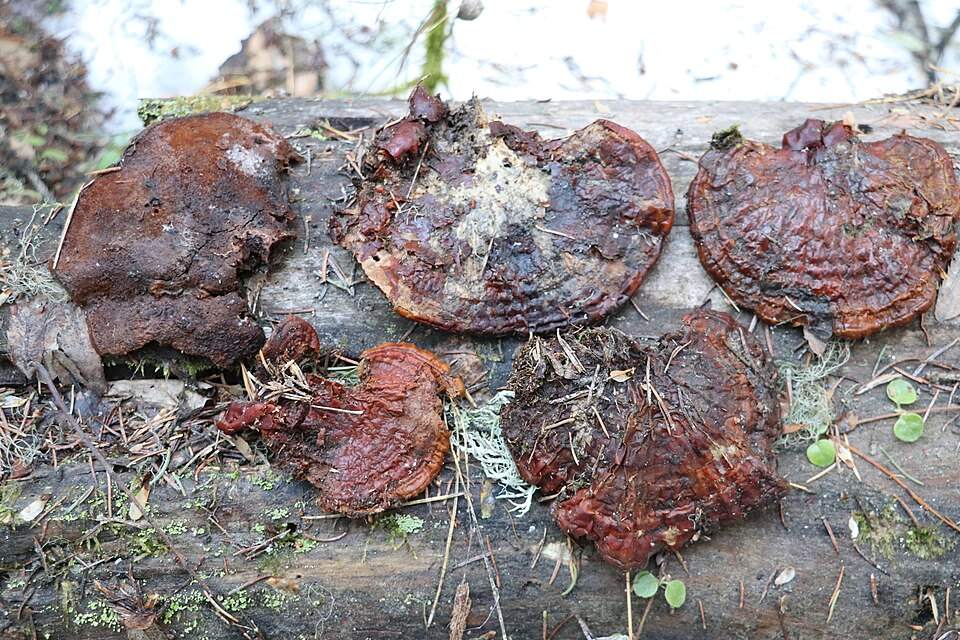

Reishi contains ganoderic acids (lanostane triterpenes) and β-glucan polysaccharides. The clinical trials are small, and it has not been shown to work as a treatment.
Main chemical constituents
- Triterpenes: ganoderic acids A, B and C; lucidenic acids
- Polysaccharides (β-D-glucan)
- Sterols (ergosterol)
Active compounds (layer 3)
Evidence by use
| Use | Evidence level | Notes |
|---|---|---|
| Support during cancer treatment | Preliminary evidence | A Cochrane review found that it may improve some immune markers and quality of life, but not enough to draw a conclusion about survival. |
| Lower blood pressure and blood glucose | Preliminary evidence | The data are weak. |
Safety and precautions
- There are case reports of liver injury with mushroom powder.
- It may raise the risk of bleeding, so take care if you use anticoagulants.
- Product quality varies (fruiting body, spores or mycelium).
Related articles
References
- Jin X, Ruiz Beguerie J, Sze DM, Chan GC. Ganoderma lucidum (Reishi mushroom) for cancer treatment. Cochrane Database Syst Rev. 2016;(4):CD007731.