
Fleeceflower root (hà thủ ô đỏ)
Reynoutria multiflora (Thunb.) Moldenke (Polygonum multiflorum Thunb.) · Polygonaceae (knotweed family) · Part used: Root tuber (raw or processed)
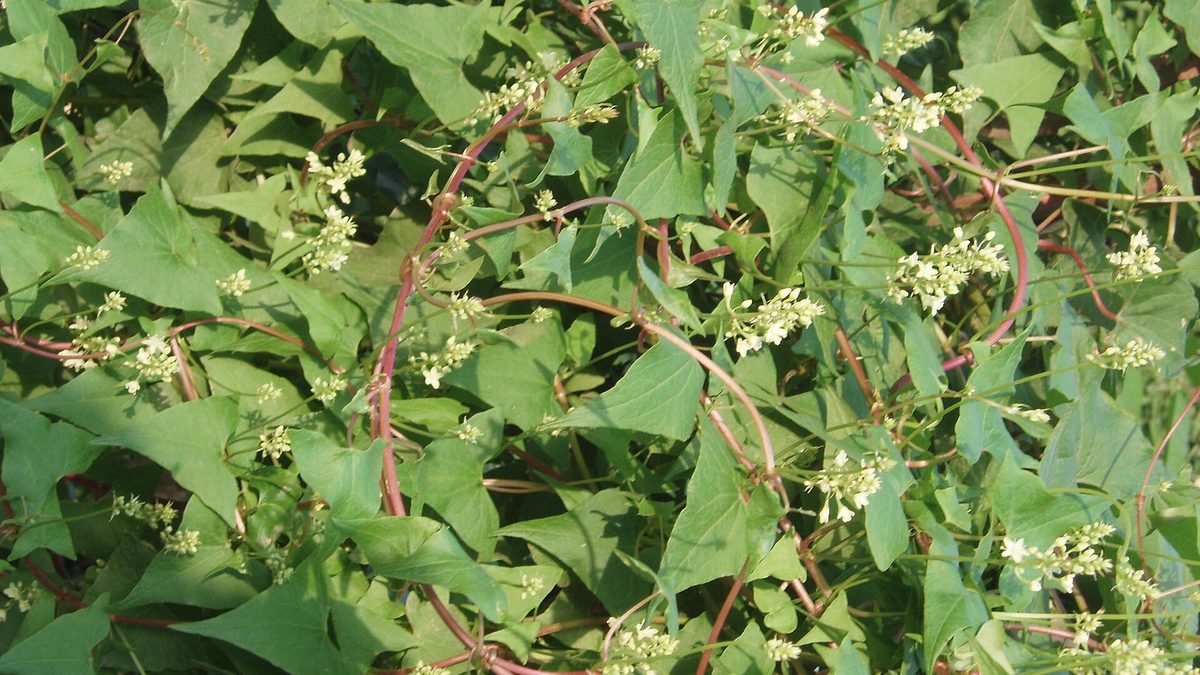

Hà thủ ô đỏ is a famous tonic in Vietnam and China, taken for greying hair and ageing. Its stilbene glycosides are the claimed active compounds, but the root is now better known for liver injury, which has led to warnings in several countries.
Main chemical constituents
- Stilbene glycosides: 2,3,5,4'-tetrahydroxystilbene-2-O-β-D-glucoside (TSG)
- Anthraquinones: emodin, physcion, chrysophanol, and dianthrones
- Tannins; over 290 compounds have been characterised in the root
Active compounds (layer 3)
Evidence by use
| Use | Evidence level | Notes |
|---|---|---|
| Premature greying of hair, ageing, tonic use | Preliminary evidence | The support is laboratory and animal work on stilbene glycosides. The sources cited on this page do not provide clinical trials showing a benefit, and the known risk to the liver is documented in people. |
What the evidence applies to
The safety information applies to raw and processed root and to products containing it. We cite no clinical trial of benefit, so the preliminary grade rests on laboratory and animal work.
What would change this grade
Up: a well-designed clinical trial of a defined preparation that has been tested for liver safety. The safety warning would be relaxed only if a validated way to predict or exclude liver injury existed.
Last reviewed: 9 October 2026
Safety and precautions
- Hà thủ ô đỏ can cause idiosyncratic liver injury, documented in case reports and clinical series. The risk is not predictable by dose.
- A variant immune gene, HLA-B*35:01, has been identified as a risk allele. Raw and processed (for example steamed) root differ in toxicity, and products vary widely.
- People with liver disease, or who take other liver-active drugs, should avoid it. Stop and seek care for jaundice, dark urine, nausea or unusual tiredness.
- We do not recommend self-treatment with this root.
References
- Wang Y, Ren T, Zhang Y, et al. Hepatotoxic Compounds and Mechanisms of Polygonum Multiflorum: A Narrative Review of Recent Advances. International journal of molecular sciences. 2026;27(11):4733. doi:10.3390/ijms27114733. PMID: 42278266
- Zahir A, Li M, Gill RM, et al. Diagnosis and Management of Drug-Induced Liver Injury After the Use of Polygonum multiflorum. ACG case reports journal. 2022;9(10):e00884. doi:10.14309/crj.0000000000000884. PMID: 36247379
- Zeng X, Li C, Liu Y, et al. HLA-B*35:01-mediated activation of emodin-specific T cells contributes to Polygonum multiflorum thunb. -induced liver injury in mice. Journal of ethnopharmacology. 2024;334:118523. doi:10.1016/j.jep.2024.118523. PMID: 38969149