
Jiaogulan (giảo cổ lam)
Gynostemma pentaphyllum (Thunb.) Makino · Cucurbitaceae (gourd family) · Part used: Leaf and aerial parts (tea, extract)
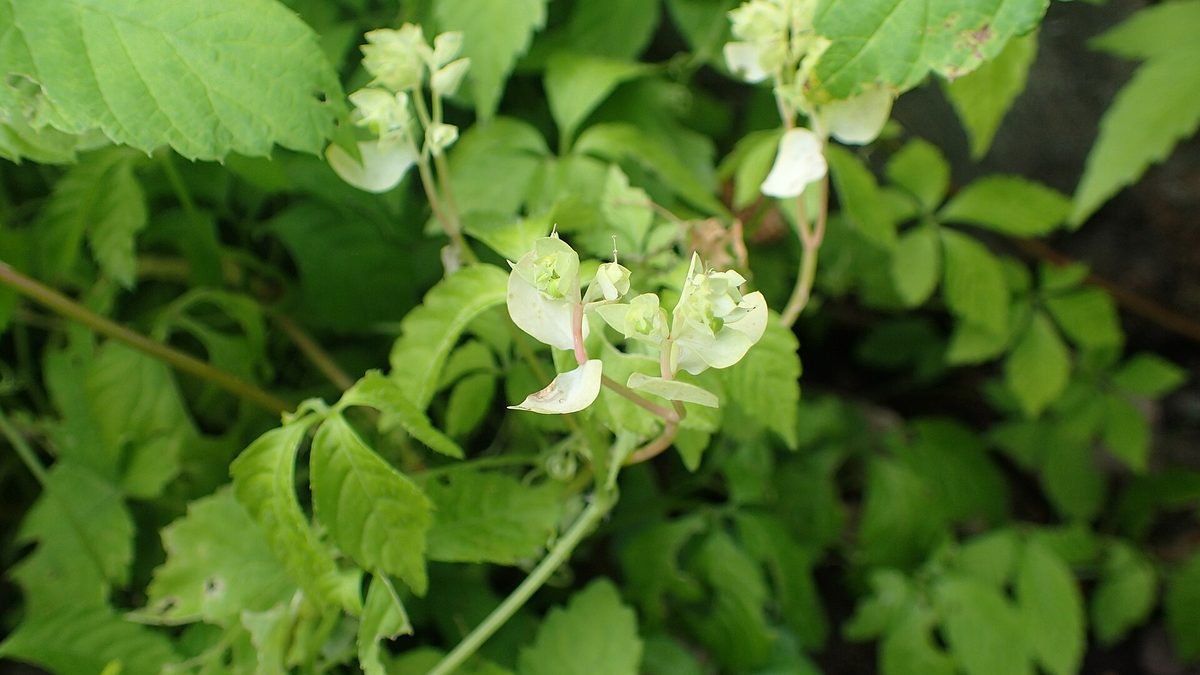

Giảo cổ lam, known as jiaogulan in China, is a climbing vine whose leaves are made into tea. Its saponins, the gypenosides, are dammarane-type triterpene glycosides, some identical to ginsenosides from ginseng. Small trials suggest effects on blood sugar and blood fats.
Main chemical constituents
- Gypenosides: dozens of dammarane saponins, among them ginsenosides Rb1, Rb3, Rd and F2
- Flavonoids such as rutin
- Polysaccharides and amino acids
Active compounds (layer 3)
Ginsenoside Rb1C54H92O23 · Dammarane saponin (protopanaxadiol type)Ginsenoside RdC48H82O18 · Dammarane saponin (protopanaxadiol type)
Evidence by use
| Use | Evidence level | Notes |
|---|---|---|
| Type 2 diabetes | Preliminary evidence | A Vietnamese trial in 24 drug-naive patients gave 6 g of tea a day for 12 weeks: fasting glucose fell by 3.0 mmol/L against 0.6 in the placebo group, and HbA1c by about 2 points against 0.2. The trial is very small and has not been repeated at scale. |
| Dyslipidaemia (high blood fats) | Preliminary evidence | A 2022 review of 22 trials (2,407 people) found results comparable to some standard lipid-lowering agents, but 14 trials had some concerns and 7 a high risk of bias. |
| Fatigue and exercise capacity | Preliminary evidence | In 100 healthy adults, 12 weeks of a gypenoside L-containing extract raised VO2 max and lowered perceived exertion compared with control. One trial of one extract. |
What the evidence applies to
Tea, 6 g a day for 12 weeks, in the diabetes trial; an extract containing gypenoside L in the fatigue trial. Other products are not covered by the studies cited.
What would change this grade
Up: an independent replication of the diabetes trial with a larger sample and HbA1c as the main endpoint. Down: a failed replication.
Last reviewed: 9 October 2026
Safety and precautions
- No significant toxicity was found in rats given the water extract for 6 months, and no serious adverse effects were reported in the human trials above. Long-term human safety data are limited.
- People taking glucose-lowering drugs should watch their blood sugar, because the effects may add together.
- There are no safety data for pregnancy or breastfeeding.
References
- Huyen VT, Phan DV, Thang P, et al. Antidiabetic effect of Gynostemma pentaphyllum tea in randomly assigned type 2 diabetic patients. Hormone and metabolic research = Hormon- und Stoffwechselforschung = Hormones et metabolisme. 2010;42(5):353-357. doi:10.1055/s-0030-1248298. PMID: 20213586
- Dai N, Zhao FF, Fang M, et al. Gynostemma pentaphyllum for dyslipidemia: A systematic review of randomized controlled trials. Frontiers in pharmacology. 2022;13:917521. doi:10.3389/fphar.2022.917521. PMID: 36091752
- Ahn Y, Lee HS, Lee SH, et al. Effects of gypenoside L-containing Gynostemma pentaphyllum extract on fatigue and physical performance: A double-blind, placebo-controlled, randomized trial. Phytotherapy research : PTR. 2023;37(7):3069-3082. doi:10.1002/ptr.7801. PMID: 36877124
- Attawish A, Chivapat S, Phadungpat S, et al. Chronic toxicity of Gynostemma pentaphyllum. Fitoterapia. 2004;75(6):539-551. doi:10.1016/j.fitote.2004.04.010. PMID: 15351107