
Black cohosh
Actaea racemosa L. (Cimicifuga racemosa (L.) Nutt.) · Ranunculaceae (buttercup family) · Part used: Rhizome and root
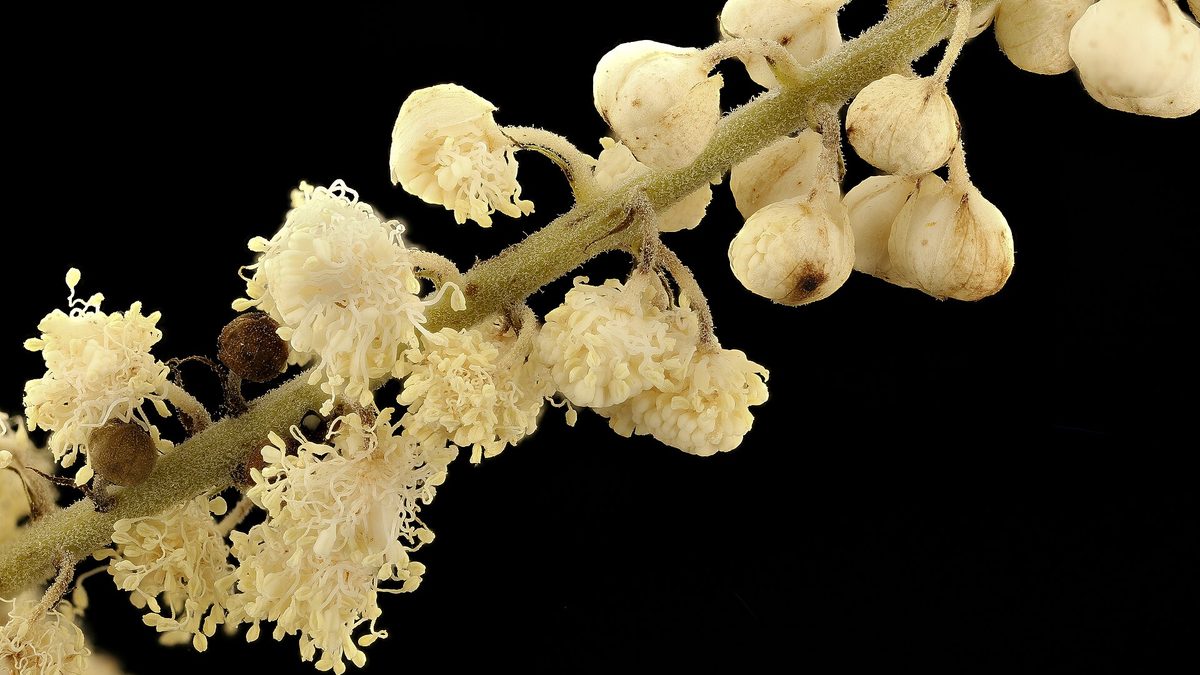

Black cohosh is a North American woodland plant whose rhizome is sold for menopausal hot flushes. Its triterpene glycosides, such as actein, are the usual marker compounds. A Cochrane review found insufficient evidence for benefit, and liver injury has been reported, though the link is disputed.
Main chemical constituents
- Cycloartane triterpene glycosides: actein, 23-epi-26-deoxyactein, cimiracemosides
- Phenolic acids: cimicifugic acids and fukinolic acid
- Other minor constituents
Active compounds (layer 3)
Evidence by use
| Use | Evidence level | Notes |
|---|---|---|
| Menopausal symptoms (hot flushes, night sweats) | Preliminary evidence | The 2012 Cochrane review found the results inconclusive, because of heterogeneity or too few studies, and concluded there is insufficient evidence to support black cohosh for menopausal symptoms. Trial quality was unclear and safety reporting poor. |
What the evidence applies to
Different black cohosh extracts: for example an isopropanolic extract in the liver meta-analysis, and varying products in the Cochrane review. Results for one product do not transfer to another.
What would change this grade
Up: well-reported trials of a defined extract. For safety: a prospective series of liver-injury cases with formal causality assessment (for example RUCAM) that identifies or excludes a product-specific risk.
Last reviewed: 9 October 2026
Safety and precautions
- Products labelled black cohosh have been implicated in clinically apparent acute liver injury, some severe enough to need a transplant. Critical reviews, however, found poor data quality and doubtful causation in many cases, and a meta-analysis of five trials in 1,117 women found no change in liver enzymes with one extract. The question is unresolved.
- Because of this, people with liver disease, or who take liver-active medicines, should avoid it. Stop and seek care for jaundice, dark urine, abdominal pain or unusual tiredness.
- Product identity and quality vary; talk to a doctor about hot flushes before using it.
References
- Leach MJ, Moore V. Black cohosh (Cimicifuga spp.) for menopausal symptoms. The Cochrane database of systematic reviews. 2012. doi:10.1002/14651858.cd007244.pub2. PMID: 22972105
- LiverTox: Clinical and Research Information on Drug-Induced Liver Injury. Black Cohosh. Bethesda (MD): National Institute of Diabetes and Digestive and Kidney Diseases; 2012. PMID: 31643322
- Teschke R. Black cohosh and suspected hepatotoxicity: inconsistencies, confounding variables, and prospective use of a diagnostic causality algorithm. A critical review. Menopause (New York, N.Y.). 2010;17(2):426-440. doi:10.1097/gme.0b013e3181c5159c. PMID: 20216279
- Naser B, Schnitker J, Minkin MJ, et al. Suspected black cohosh hepatotoxicity: no evidence by meta-analysis of randomized controlled clinical trials for isopropanolic black cohosh extract. Menopause (New York, N.Y.). 2011;18(4):366-375. doi:10.1097/gme.0b013e3181fcb2a6. PMID: 21228727