
Moringa (chùm ngây)
Moringa oleifera Lam. · Moringaceae (drumstick tree family) · Part used: Leaf, pod, seed
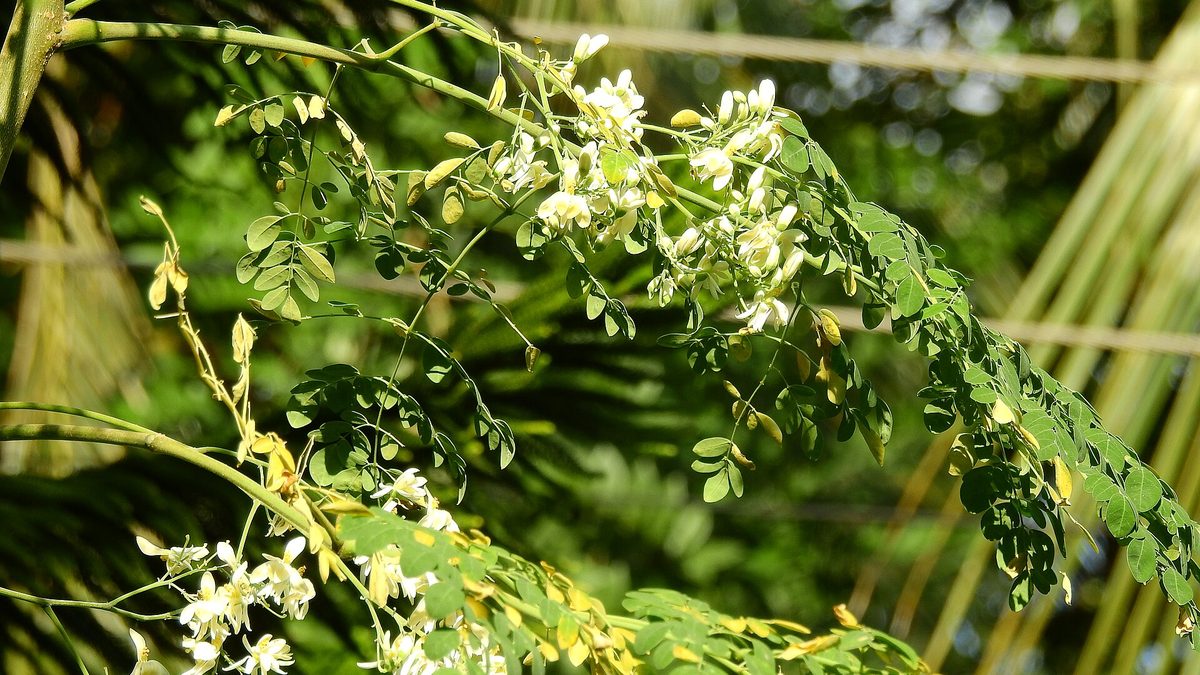

Chùm ngây is a fast-growing tree whose leaves and pods are eaten in Vietnam and across the tropics. Its leaves contain glucosinolates, which release isothiocyanates, and flavonol glycosides. Small trials suggest modest effects on blood glucose and blood pressure, but studies are very uneven.
Main chemical constituents
- Glucosinolates: glucomoringin, which yields the isothiocyanate moringin when the tissue is crushed or chewed
- Flavonol glycosides: quercetin and kaempferol glycosides, including isoquercitrin
- Phenolic acids such as chlorogenic acid
- A nutrient-rich leaf: protein, provitamin A, vitamin C and minerals
Active compounds (layer 3)
MoringinC14H17NO5S · Isothiocyanate (rhamnosyl-oxybenzyl isothiocyanate)IsoquercitrinC21H20O12 · Flavonol glycoside (quercetin-3-O-glucoside)
Evidence by use
| Use | Evidence level | Notes |
|---|---|---|
| Blood glucose and blood pressure in metabolic disease | Preliminary evidence | A 2026 meta-analysis of 20 clinical studies found modest lower fasting glucose (SMD -0.70), HbA1c (-0.62%) and blood pressure. The authors call the findings preliminary and hypothesis-generating because of heterogeneity and study quality. |
| Blood lipids | Preliminary evidence | A 2015 review noted five published human studies with whole-leaf powder showing anti-hyperglycaemic and lipid-lowering activity, and a standardisation problem across products. |
What the evidence applies to
Dried leaf powder or leaf extract in the studies cited; products are not standardised. It does not cover seed, root or bark preparations.
What would change this grade
Up: trials of one standardised leaf preparation with its moringin or flavonoid content reported. Down: larger low-risk-of-bias trials showing no effect on HbA1c or blood pressure.
Last reviewed: 9 October 2026
Safety and precautions
- The leaf is widely eaten, and animal and human studies reviewed in 2015 reported a high degree of safety. Product standardisation is an issue.
- It may add to the effect of glucose-lowering and blood-pressure drugs, so people on these should monitor their readings.
- Concentrated seed, root and bark preparations are not equivalent to the leaf. Root and bark are traditionally avoided in pregnancy; stay with food amounts of leaf unless a doctor advises.
References
- Stohs SJ, Hartman MJ. Review of the Safety and Efficacy of Moringa oleifera. Phytotherapy research : PTR. 2015;29(6):796-804. doi:10.1002/ptr.5325. PMID: 25808883
- Mokgalaboni K, Ahmed SR, Phoswa WN, et al. Moringa oleifera on hyperglycemia and hypertension in metabolic diseases: Systematic review, exploratory meta-analysis and meta-regression. Metabolism open. 2026;29:100451. doi:10.1016/j.metop.2026.100451. PMID: 41816507
- Wang J, Yang S, Shen S, et al. Biological Activities of Glucosinolate and Its Enzymatic Product in Moringa oleifera (Lam.). International journal of molecular sciences. 2025;26(15):7323. doi:10.3390/ijms26157323. PMID: 40806456