
Artichoke
Cynara cardunculus var. scolymus (L.) Fiori (Cynara scolymus L.) · Asteraceae (daisy family) · Part used: Leaf (extract); flower head (food)
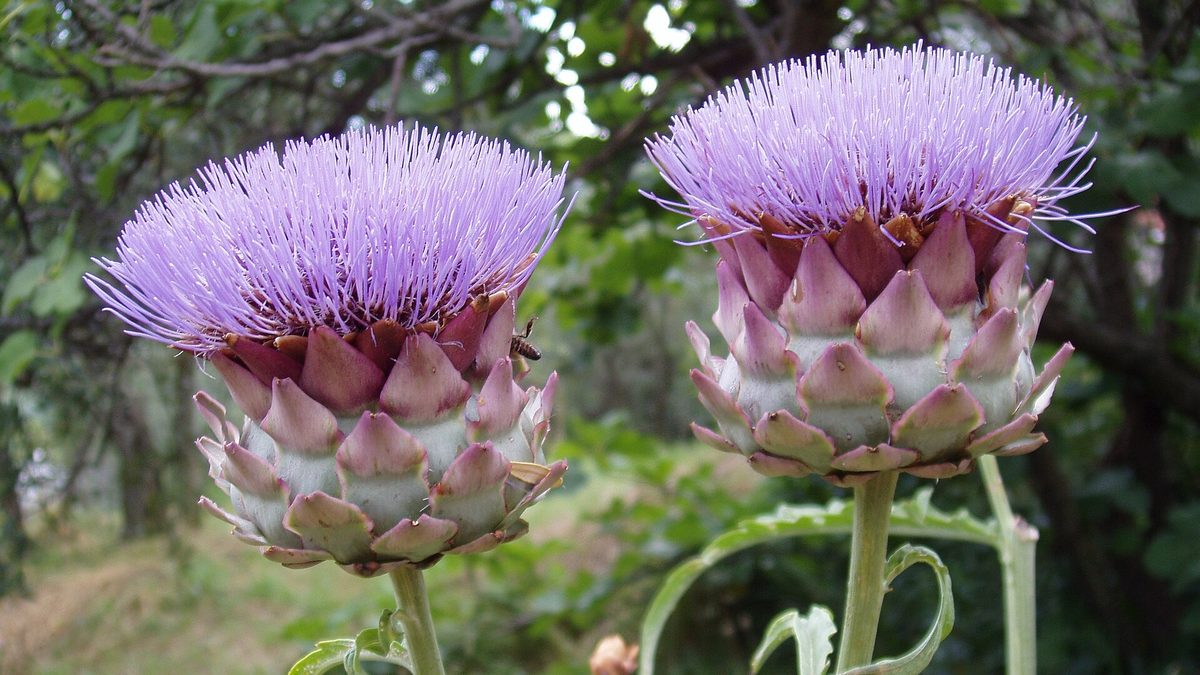

Artichoke leaf extract is rich in caffeoylquinic acids such as chlorogenic acid and cynarin, plus luteolin glycosides. Trials point to a modest fall in blood cholesterol and some relief of indigestion, but they are few and short.
Main chemical constituents
- Caffeoylquinic acids: chlorogenic acid, cynarin (1,3-dicaffeoylquinic acid) and other dicaffeoylquinic acids
- Flavonoids: luteolin glycosides (such as luteolin-7-O-glucoside) and apigenin glycosides
- Cynaropicrin, a bitter sesquiterpene lactone, in the leaf
- Inulin, a prebiotic fibre, in the flower head and root
Active compounds (layer 3)
Evidence by use
| Use | Evidence level | Notes |
|---|---|---|
| Functional dyspepsia (indigestion) | Moderate evidence | One six-week, placebo-controlled trial in 247 patients found greater symptom improvement and quality of life with the extract; other trials are small. |
| Raised blood cholesterol | Moderate evidence | A meta-analysis of 9 trials (702 people) found falls of about 18 mg/dL in total cholesterol and 15 mg/dL in LDL, with no change in HDL. The effect is modest and the trials differ in extract and dose. |
| Liver enzymes in fatty liver disease | Preliminary evidence | A meta-analysis of 8 small trials found lower AST and ALT, especially in non-alcoholic fatty liver disease. These are laboratory markers, not liver outcomes. |
What the evidence applies to
The dyspepsia trial used one commercial leaf extract, 2 × 320 mg three times a day for 6 weeks; the lipid meta-analysis pooled several different artichoke extracts. The evidence does not cover the cooked flower head eaten as food, or artichoke tea.
What would change this grade
Up: a large trial of one standardised extract showing a clear fall in LDL cholesterol, or a second dyspepsia trial of similar size. Down: pooled results restricted to the better-designed trials showing no effect.
Last reviewed: 9 October 2026
Safety and precautions
- The leaf extract was generally well tolerated in the trials cited here; mild stomach upset is the usual complaint.
- Artichoke is a daisy-family plant. People allergic to other Asteraceae (for example chamomile or ragweed) can react, and contact dermatitis, including airborne, has been reported.
- Artichoke increases bile flow. People with bile-duct obstruction or gallstones should ask a doctor first.
References
- Holtmann G, Adam B, Haag S, et al. Efficacy of artichoke leaf extract in the treatment of patients with functional dyspepsia: a six-week placebo-controlled, double-blind, multicentre trial. Alimentary pharmacology & therapeutics. 2003;18(11-12):1099-1105. doi:10.1046/j.1365-2036.2003.01767.x. PMID: 14653829
- Sahebkar A, Pirro M, Banach M, et al. Lipid-lowering activity of artichoke extracts: A systematic review and meta-analysis. Critical reviews in food science and nutrition. 2018;58(15):2549-2556. doi:10.1080/10408398.2017.1332572. PMID: 28609140
- Moradi S, Shokri-Mashhadi N, Saraf-Bank S, et al. The effects of Cynara scolymus L. supplementation on liver enzymes: A systematic review and meta-analysis. International journal of clinical practice. 2021;75(11):e14726. doi:10.1111/ijcp.14726. PMID: 34383355
- Samaran Q, Clark E, Dereure O, et al. Airborne allergic contact dermatitis caused by artichoke. Contact dermatitis. 2020;82(6):395-397. doi:10.1111/cod.13480. PMID: 32017132